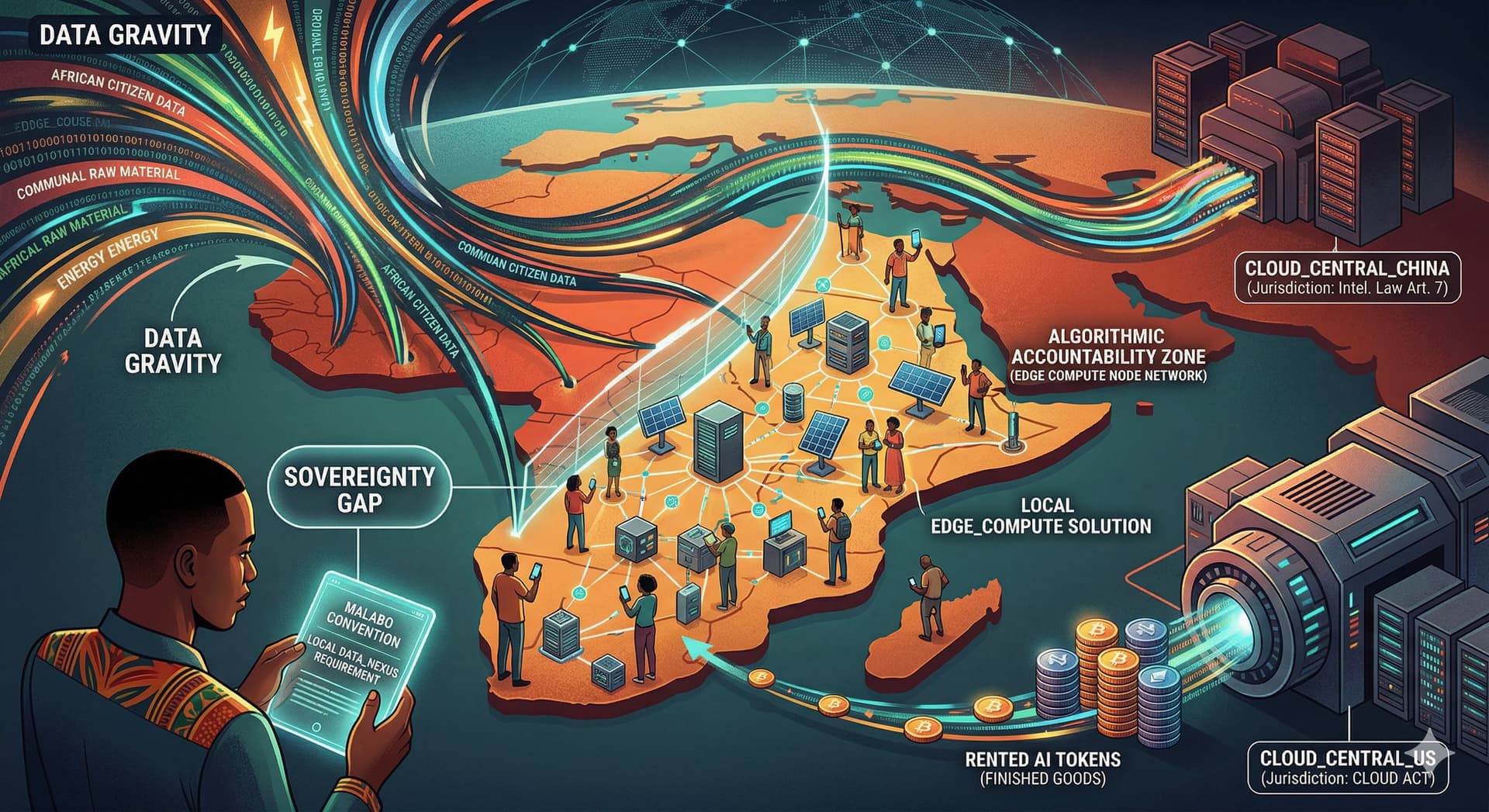
The global landscape of intelligence is currently characterized by an extreme asymmetry in Data Gravity. Statistics from 2024 and 2025 indicate that approximately 96% of AI-related data generated within Africa is processed and stored in foreign jurisdictions, primarily the United States and China. This "data drain" mirrors historical extraction patterns, where raw materials were exported for refinement only to be sold back as expensive finished goods. In the context of AI, the raw material is the communal data of African citizens, and the refined product is the "rented token" from foreign frontier models.
The sovereign risk of this arrangement is codified in legal frameworks such as the United States CLOUD Act and the 2017 Intelligence Law of China. The CLOUD Act grants the US government the authority to compel providers under its jurisdiction to hand over data regardless of where the physical servers are located. Similarly, the Chinese framework mandates that domestic companies assist in national intelligence efforts, effectively making any African data stored in these clouds subject to foreign state surveillance. This creates a "Sovereignty Gap" that can only be closed through the deployment of local, edge-based compute.
| Regulatory Threat | Origin | Impact on African Data Sovereignty |
|---|---|---|
| US CLOUD Act | United States | Extraterritorial access to data held by US-based providers. |
| Intelligence Law (Art. 7) | China | Mandatory corporate cooperation with state intelligence. |
| GDPR Adequacy | European Union | Restricts data flow to nations lacking "European-standard" laws. |
| Malabo Convention | African Union | Continental standard for data protection and cyber-sovereignty. |
The physical reality of servers determines the jurisdictional boundaries of intelligence. By shifting inference from the cloud to the edge—the phones, local stations, and solar-powered hubs within the continent—African nations can assert algorithmic accountability. This shift is supported by a "backdoor" regulatory movement where countries like Angola, Kenya, and Nigeria are embedding AI-related transparency requirements within revised data protection laws, forcing foreign companies to establish a local nexus for their AI operations.